
The Massachusetts Auto Body Association just issued a consumer alert. A Rhode Island shop founded in 1977 has been living the answers for nearly 50 years.
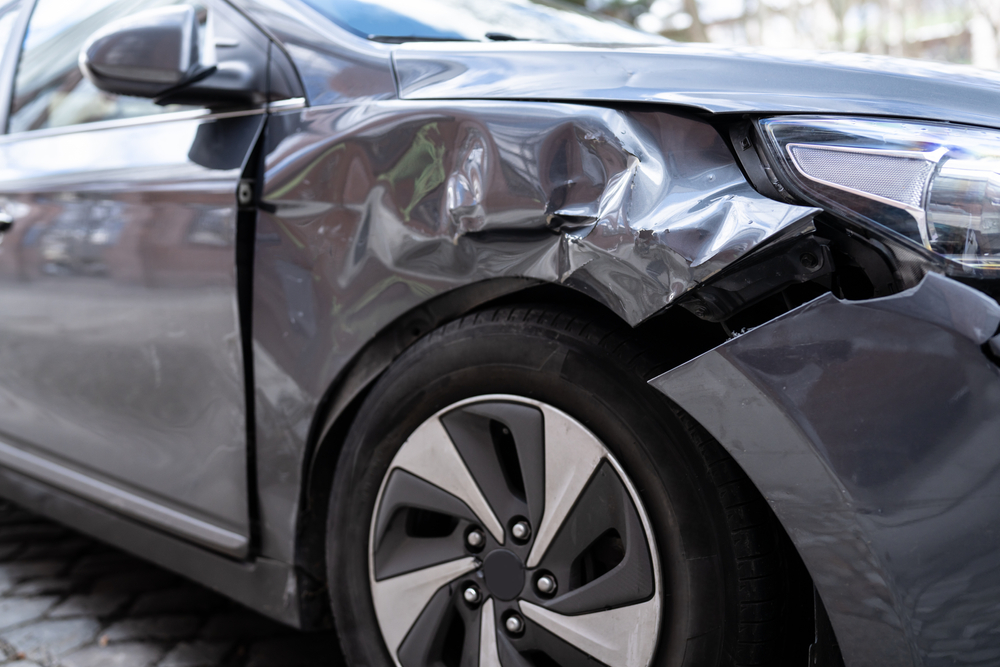 "Would you let your daughter drive this car?"
The question was posed at a hearing of insurance executives discussing modern collision repair. The response from the room: silence.
That silence is the reason the Massachusetts Auto Body Association (MABA) issued a public consumer advisory in May 2026 — warning drivers that insurance cost pressures are leading some shops to skip critical repair procedures, leaving vehicles that look repaired but may not perform safely in a future collision.
The advisory came with a list of 10 questions every driver should ask before choosing a collision repair shop. Published by Repairer Driven News, BodyShop Business, Aftermarket Matters, and syndicated across the collision repair industry, these questions represent the current gold standard for consumer protection in auto body repair.
At Hillview Auto Body in Johnston, Rhode Island, those questions have a direct, verifiable answer. Here is every one of them — asked and answered.
Why These 10 Questions Matter Right Now
Modern vehicles are no longer simple mechanical assemblies. Today's cars integrate cameras, radar, ultrasonic sensors, high-strength steel, aluminum structures, and advanced driver assistance systems (ADAS) — all of which are affected by collision damage, and all of which require precise, manufacturer-approved procedures to restore properly.
According to Enlyte's 2026 Envision Trends Report, ADAS calibrations appeared on 34.7% of all repair estimates in 2025, up from just 12.1% in 2022 — a nearly threefold increase in three years. The average cost of a single calibration procedure reached $688. A benchmark study by Revv found that 61% of vehicles arriving for collision repair require some form of ADAS calibration, yet the Automotive Service Association warns that nearly half of all U.S. shops miss required post-repair calibrations entirely.
The financial consequences of a missed calibration are severe. ADAS-related lawsuits grew from 3 cases in 2018 to 61 in 2024, with the average settlement costing between $200,000 and $1 million.
And yet — according to MABA — some shops skip these steps not out of incompetence, but because their insurance company relationships don't fully reimburse them for doing it right. As MABA executive director Evangelos "Lucky" Papageorg stated: "When those repairs are done correctly, vehicles are restored to their intended safety performance. When they're not, the consequences may not be visible — until the next accident. It may even be the cause of the next accident."
This is the context in which you should evaluate every auto body shop you consider. And these are the questions that reveal the truth.
The 10 Questions — Asked and Answered by Hillview Auto Body
1. Will you repair my vehicle according to OEM manufacturer procedures — even if insurance doesn't fully cover it?
Why it matters: OEM (Original Equipment Manufacturer) repair procedures are the documented, tested repair methods published by the company that built your vehicle. They specify how materials should be joined, where welds should be placed, what structural tolerances are acceptable, and how safety systems should be restored. Shops that deviate from OEM procedures — because insurers won't reimburse the time or materials required — produce repairs that may look correct but are structurally or electronically compromised.
MABA's president Matthew Ciaschini stated plainly: "As vehicles become more advanced, the margin for error gets smaller."
Hillview's answer: Yes. Hillview Auto Body follows OEM repair procedures as the standard for every eligible repair. Because Hillview is not party to any Direct Repair Program (DRP) agreement with an insurance company, the shop is not subject to insurer-imposed cost caps that force procedural shortcuts. When an OEM procedure is required, it is performed — regardless of whether the insurer's initial estimate covers it. If it doesn't, Hillview's dedicated Claims Specialist documents and negotiates the supplement on the customer's behalf.
2. Are you on any insurance company's preferred shop list — and what does that mean for my repair?
Why it matters: Direct Repair Programs (DRPs) are agreements between insurers and shops in which the shop agrees to discounted labor rates and cost controls in exchange for a steady stream of referrals. The shop's primary customer, in practice, becomes the insurer — not the vehicle owner. When a shop's financial relationship with an insurer depends on staying within budget targets, repair decisions are made under pressure that does not exist at an independent shop.
Rhode Island law addresses this directly. R.I. Gen. Laws §27-29-4(15) designates it an Unfair Claims Practice for any insurer to require or interfere with a policyholder's free choice of repair facility. The legal right to choose is absolute — but exercising it requires knowing about it.
Hillview's answer: Hillview Auto Body is not on any insurance company's preferred or referral list. The shop has operated completely independently since its founding in 1977, and has never entered a DRP agreement with any insurer. As the shop states directly: "Creating an agreement between ourselves and an insurance company would compromise our ability to fully represent your best interests." Every repair decision at Hillview is made for the vehicle in front of them and the customer waiting on it — with no insurer cost pressure in the room.
3. Will you document and negotiate any additional damage found after disassembly?
Why it matters: The initial estimate written at the scene or from photos cannot capture all the damage. Once a vehicle is disassembled, technicians routinely discover additional structural, mechanical, or electronic damage that was hidden. This is called a supplement. How a shop handles that discovery — whether they document it thoroughly, communicate it clearly, and fight with the insurer to pay for it — determines whether your vehicle is actually made whole.
A shop under DRP cost pressure has a financial incentive to minimize supplements, because doing so keeps the shop within the insurer's preferred budget and preserves the referral relationship. An independent shop has no such incentive.
Hillview's answer: Yes. Hillview's dedicated Claims Specialist manages the supplement process as a standard part of every repair. When additional damage is found after disassembly, it is fully documented with photos, part numbers, and labor hours, and a formal supplement is submitted to the responsible insurer. Hillview negotiates directly with adjusters on the customer's behalf — a service most shops, especially DRP shops, do not provide as standard practice.
4. Will you use OEM parts, aftermarket parts, or recycled parts — and why?
Why it matters: Under R.I. Gen. Laws §27-10.2-2, no insurance company may require the use of aftermarket parts when negotiating repairs unless the vehicle owner provides written consent to the repairer. For vehicles less than 30 months from the date of manufacture, the owner has the explicit right to require OEM parts — and the insurer must pay for them.
Research confirms why this matters. A U.S. General Accounting Office study found that aftermarket parts fit improperly, corrode faster, and cause greater damage in subsequent collisions than OEM parts. Ford's own internal research found the same. When aftermarket parts are used on ADAS-equipped vehicles, even minor dimensional deviations can misalign sensors, rendering safety systems non-functional without any visible indication.
Hillview's answer: Hillview uses OEM parts as the default for all eligible vehicles under Rhode Island law. Aftermarket parts are never installed without the customer's explicit written consent. For vehicles under 30 months old, Hillview enforces the customer's statutory right to OEM parts and ensures the insurer pays accordingly. This is not a premium service at Hillview. It is the baseline.
5. Do you perform required calibrations for safety systems like ADAS — cameras, sensors, braking?
Why it matters: This is the question the industry is most urgently raising right now. ADAS calibration is not optional on vehicles equipped with these systems. When collision damage affects areas where sensors, cameras, or radar components are mounted — bumpers, windshields, mirrors, quarter panels — those systems must be recalibrated to factory specifications before the vehicle is safe to drive.
Calibration fees have nearly doubled in five years, reaching an average of $500 per vehicle, reflecting the specialized tools, training, and facilities required to perform them accurately. Nearly half of all U.S. shops miss required post-repair calibrations, and ADAS-related lawsuits grew from three cases in 2018 to 61 in 2024, with average settlements costing between $200,000 and $1 million or more.
The Highway Loss Data Institute projects that by 2029, eight distinct ADAS systems will be present in half or more of all registered vehicles. The calibration gap between what vehicles need and what some shops provide is widening — not narrowing.
Hillview's answer: Yes. Hillview Auto Body is equipped and trained to identify, document, and perform the calibration procedures required for each vehicle's safety systems as part of the standard repair process. ADAS calibration is not treated as an upsell or an afterthought — it is part of a complete, safe repair. When calibration is required by the manufacturer's procedures for the repair being performed, it is included in Hillview's documentation and supplement negotiation with the insurer.
6. Will you provide a detailed written repair plan and explain it to me?
Why it matters: A written estimate is a legally binding agreement between the shop and the customer. It documents what work will be done, what parts will be used, and what the cost is — and it is the document against which the final invoice is compared. Shops that are vague about their estimates, rely on verbal agreements, or bury procedures in technical jargon they don't explain are shops that leave customers unprotected.
Hillview's answer: Yes. Every Hillview repair begins with a detailed written estimate that the team walks through with the customer in plain language — not industry shorthand. Every line item is explained. Every decision about parts, labor, and procedure is available for the customer to review and understand before any work begins. If the scope changes during the repair due to discovered damage, the customer is informed before additional work proceeds, and a written supplement is filed with the insurer.
7. Do you have the proper equipment to repair today's advanced materials — aluminum, high-strength steel, EVs?
Why it matters: Modern vehicle construction increasingly uses advanced high-strength steel (AHSS), ultra-high-strength steel (UHSS), and aluminum — materials that require specific welding equipment, dedicated repair spaces (aluminum must be repaired in a separate, contamination-free area to prevent galvanic corrosion), and technicians trained in those procedures. Shops that use standard steel welding equipment on aluminum structures create weaknesses that are invisible to the eye and catastrophic in a subsequent collision.
Hillview's answer: Hillview's full team of technicians — including Lead Technician JR and shop technicians Dan, Jeff, Brian, Keith, Jimmy, David, Walter, and Louis — brings the combined experience and equipment required to handle modern vehicle materials correctly. The shop's investment in equipment and ongoing technical knowledge reflects a commitment to repairing vehicles as they were built, not as they were built 20 years ago.
8. Will you provide a written warranty on your repairs — and what does it cover?
Why it matters: A warranty is a shop's commitment in writing that the work they performed will hold. Shops that decline to offer warranties, offer vague warranty language, or limit warranties to narrow conditions are communicating something important about their confidence in the quality of their work.
Hillview's answer: Yes. Hillview Auto Body stands behind its repairs with a written warranty. Specific warranty terms are reviewed with the customer at time of estimate. Nearly five decades of operation without relying on an insurance company referral pipeline is itself a warranty of sorts — a shop that doesn't do the work right doesn't survive for 50 years on reputation and referrals alone.
9. What happens if additional damage is found during the repair?
Why it matters: This question has a right answer and a wrong answer. The right answer: the shop stops, documents the additional damage, notifies the customer, submits a supplement to the insurer, gets approval, and then proceeds. The wrong answer: the shop absorbs the cost, skips the procedure, or uses a cheaper part to stay within budget — and the customer gets a vehicle that was repaired to a budget rather than to a standard.
Hillview's answer: When additional damage is found during disassembly, Hillview stops and documents it thoroughly. A formal supplement is prepared and submitted to the responsible insurer. The customer is notified of what was found and what is needed. Work does not proceed on the newly discovered damage until the supplement is addressed. This is the process — not the exception.
10. Will you review the completed repairs with me before I take the vehicle home?
Why it matters: A final review with the customer before delivery is not a courtesy — it is a quality control checkpoint and a communication moment. It is the opportunity for the shop to walk through what was done, why it was done, what parts were used, and what the customer should know going forward. Shops that skip this step are treating delivery as the end of the transaction rather than the culmination of a service.
Hillview's answer: Yes. Hillview reviews completed repairs with every customer at delivery. The team explains what was done, what was found during the repair, what parts were installed, and what the customer should be aware of. The bill is explained line by line. No customer leaves without understanding exactly what happened to their vehicle.
The Context Behind the Questions: What's Happening in the Industry Right Now
The MABA consumer advisory was not issued in a vacuum. It reflects a documented, industry-wide tension between the true cost of modern collision repair and what insurance companies are willing to reimburse.
The average total cost of repair reached $4,818 in 2025, a 1.7% increase over 2024 — the lowest rate of increase since 2017. Calibrations appeared on 28.3% of all repairable appraisals in 2025, up from 21.8%, a 30% increase in the number of estimates that include at least one calibration.
Nearly 1 in 4 crashed vehicles is now declared a total loss. Total loss frequency reached a record 23.1% of all claims in 2025 — the highest figure in industry history. The average age of light vehicles in the U.S. reached 12.8 years in 2025.
As MABA noted, when insurance reimbursement falls short of the true cost of performing a correct, complete repair, some shops face a pressure that independent shops like Hillview do not: cut the procedure or absorb the loss. DRP shops operating under negotiated cost agreements feel that pressure on every claim. Hillview, operating independently for nearly 50 years, has never been subject to it.
Rhode Island Gives Drivers More Protection Than Most States
Rhode Island's consumer protection statutes for collision repair are among the strongest in the country — but they only protect drivers who know they exist.
Free choice of shop (R.I. Gen. Laws §27-29-4(15)): No insurer may require or interfere with your free choice of repair facility. Once you name your shop, the insurer may not attempt to change your decision.
OEM parts entitlement (R.I. Gen. Laws §27-10.2-2): No insurer may require aftermarket parts without your written consent. Vehicles under 30 months from manufacture are entitled to OEM parts by law.
Comparable rental vehicle (R.I. Gen. Laws §27-29-4(18)): If the accident was not your fault and liability is accepted, you are entitled to a rental vehicle comparable to your own for the full duration of repairs — at no cost to you.
Third-party claim rights (DBR Regulation 73 §6D): When fault is clear, the at-fault insurer cannot require you to file through your own policy.
Fair total loss valuation (DBR Regulation 73 §7A(2)): You are entitled to actual retail value per NADA, plus Rhode Island's 7% sales tax and $25 DMV registration fee.
Hillview's dedicated Claims Specialist ensures these rights are exercised on every eligible claim — so the customer doesn't have to know the statute numbers to benefit from them.
Why Hillview Auto Body Has Been the Answer Since 1977
There are many collision repair shops in Rhode Island. The 10 questions above are designed to separate the ones working for you from the ones working for your insurer.
Hillview Auto Body was founded by Tom Hardiman in Johnston, Rhode Island in 1977. For nearly five decades, the shop has operated without a single DRP agreement — a choice that means every repair is made to the standard the vehicle requires, not the budget the insurer prefers.
The shop is a certified member of the Auto Body Association of Rhode Island (ABARI), which holds members to a rigid code of ethics, advocates for consumer-protective legislation, and provides dispute resolution for Rhode Island drivers who have problems with a body shop. ABARI membership requires that shops hold fewer than four DRP contracts — a rule designed to ensure shops stay on the customer's side.
Hillview holds an A+ rating with the Better Business Bureau and is reviewed on Google and Yelp as one of the most trusted independent collision centers in the Providence metro area.
When you ask Hillview any of MABA's 10 questions, the answers don't require hedging. They have been the answers for 50 years.
Ready to Make the Right Call?
Hillview Auto Body & Collision Center 105 Railroad Ave, Johnston, RI 02919
📞 Local: (401) 232-1660 📞 Toll-Free: (800) 427-1660 📧 Email:
ABARI Certified Member | BBB A+ Rated | Independently Owned and Operated Since 1977 Serving Johnston, Providence, Cranston, North Providence, Smithfield, and all of Rhode Island
Sources
- MABA — 10 Questions Every Consumer Should Ask Before Choosing an Auto Body Shop (May 2026) Repairer Driven News: https://www.repairerdrivennews.com/2026/05/11/massachusetts-auto-body-association-releases-10-questions-consumers-should-ask-collision-repair-shops/ BodyShop Business: https://www.bodyshopbusiness.com/massachusetts-auto-body-association-urges-consumers-to-ask-10-critical-questions-before-choosing-a-repair-shop/ Aftermarket Matters: https://www.aftermarketmatters.com/uncategorized/maba-10-questions-every-consumer-should-ask-before-choosing-an-auto-body-shop/
- Enlyte / Mitchell International — 2026 Envision Trends Report (ADAS calibrations on 34.7% of 2025 estimates; average calibration cost $688) https://www.collisionrepairmag.com/multi-media/podcast/repair-trends/article/15826600/mitchell-international-adas-calibrations-included-in-a-third-of-2025-estimates-report-finds
- CCC Intelligent Solutions — Crash Course 2026 / Aging Fleet Report (Average TCOR $4,818; 23.1% total loss rate; 28.3% calibration frequency; fleet age 12.8 years) https://www.autobodynews.com/news/aging-fleet-rising-complexity-define-collision-repair-landscape https://www.cccis.com/news-and-insights/posts/the-current-state-of-calibrations-a-turning-point-for-collision-repair
- Revv / Automotive Service Association — ADAS Calibration Gap Data (61% of vehicles require calibration; ~half of shops miss required calibrations; ADAS lawsuits $200K–$1M) https://www.autobodynews.com/news/2025-data-points-to-fewer-claims-more-collision-repair-complexity-in-2026
- Rhode Island General Laws §27-29-4 — Anti-Steering / Unfair Claims Practices https://law.justia.com/codes/rhode-island/2022/title-27/chapter-27-29/section-27-29-4/
- Rhode Island General Laws §27-10.2-2 — Aftermarket Parts / OEM Rights https://law.justia.com/codes/rhode-island/2022/title-27/chapter-27-10-2/section-27-10-2-2/
- Rhode Island DBR Regulation 73 — Unfair Property/Casualty Claims Settlement Practices https://rules.sos.ri.gov/regulations/part/230-20-40-2
- Auto Body Association of Rhode Island (ABARI) https://www.abari.net
- U.S. General Accounting Office — Non-OEM Crash Parts Study https://www.mwl-law.com/use-aftermarket-non-oem-crash-parts-repair-damaged-vehicles/
- Highway Loss Data Institute — ADAS Penetration Projections https://www.iihs.org/topics/advanced-driver-assistance